From Traditional Processing to Continuous Industrial Production
Baobab (Adansonia digitata) is one of Africa’s most iconic native fruits. For centuries, it has been consumed locally as a nutritious food rich in vitamin C, dietary fiber, minerals, and natural antioxidants. Today, baobab powder has gained worldwide recognition as a premium superfood ingredient and is increasingly used in nutritional supplements, beverages, dairy products, bakery, confectionery, and cosmetic formulations.
As international demand continues to grow, baobab processing is rapidly transitioning from small-scale manual production to standardized industrial manufacturing. For producers, achieving consistent powder quality while maintaining high productivity has become one of the industry’s biggest challenges.
At WEILIANG, our journey with baobab powder processing began more than ten years ago. Through continuous testing, equipment optimization, and close cooperation with African manufacturers, we have developed practical screening solutions specifically designed for this unique material.
Challenges of Baobab Fruit Processing
Unlike many food powders, baobab pulp presents several processing difficulties due to its natural structure.
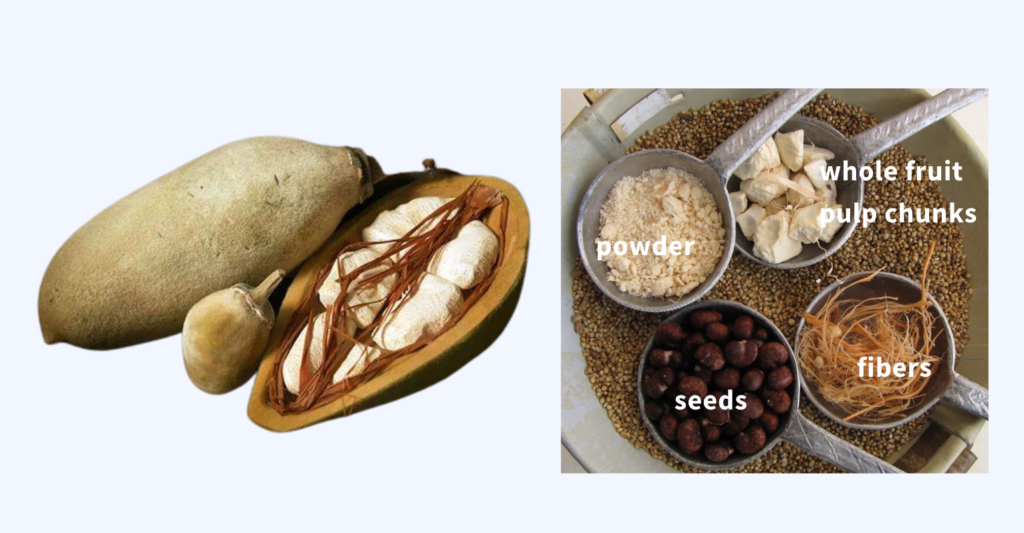
| 1. Hard Seeds Baobab fruits contain numerous hard seeds firmly embedded within the dry pulp. During the initial separation stage, these seeds create significant impact forces inside the screening equipment. Conventional woven wire mesh may deform over time, leading to reduced screening accuracy and increased maintenance requirements. A reliable first-stage separation system must therefore withstand continuous impact while maintaining dimensional stability. |
| 2. Fibrous Material Another challenge is the high content of natural fibers. Although nutritionally valuable, these fibers negatively affect powder appearance and product consistency if they remain in the finished product. Fine fibers can easily pass through conventional screens or become entangled in the mesh, reducing production efficiency and increasing cleaning frequency. |
| 3. Powder Uniformity Export-grade baobab powder requires: – Uniform particle size – Smooth texture – Minimal fiber content – Stable product quality Consistent particle distribution improves dissolution, mixing performance, and visual appearance in downstream food and beverage applications. |
| 4. Hygienic Production Traditional manual processing is labor-intensive and often involves repeated handling of the material. As food safety standards continue to rise globally, processors are increasingly seeking enclosed, continuous systems that reduce contamination risks while improving productivity and traceability. |
A Typical Industrial Processing Flow
Although processing methods vary between manufacturers, industrial baobab powder production generally follows the same basic sequence:
Whole Baobab Fruit —> Fruit Breaking —> Pulp Separation —> Fiber & Seed Removal —> Fine Powder Screening —> Powder for Packing or for Making Juice —> Seeds for Oil Extraction
Each processing stage directly influences the quality of the final product.
Among these steps, seed removal and fine powder screening are particularly critical, as they determine product purity, yield, and overall production efficiency.
Why Conventional Screening Methods Often Fall Short
Many processors initially attempt to separate baobab powder using traditional vibrating screens.
However, this approach often presents several limitations:
- Fiber accumulation on the screen surface
- Frequent mesh blockage
- Difficulty handling hard seeds
- Interrupted production due to repeated cleaning
- Inconsistent powder quality
For processors aiming to increase production capacity while maintaining hygiene standards, a more specialized screening technology is often required.
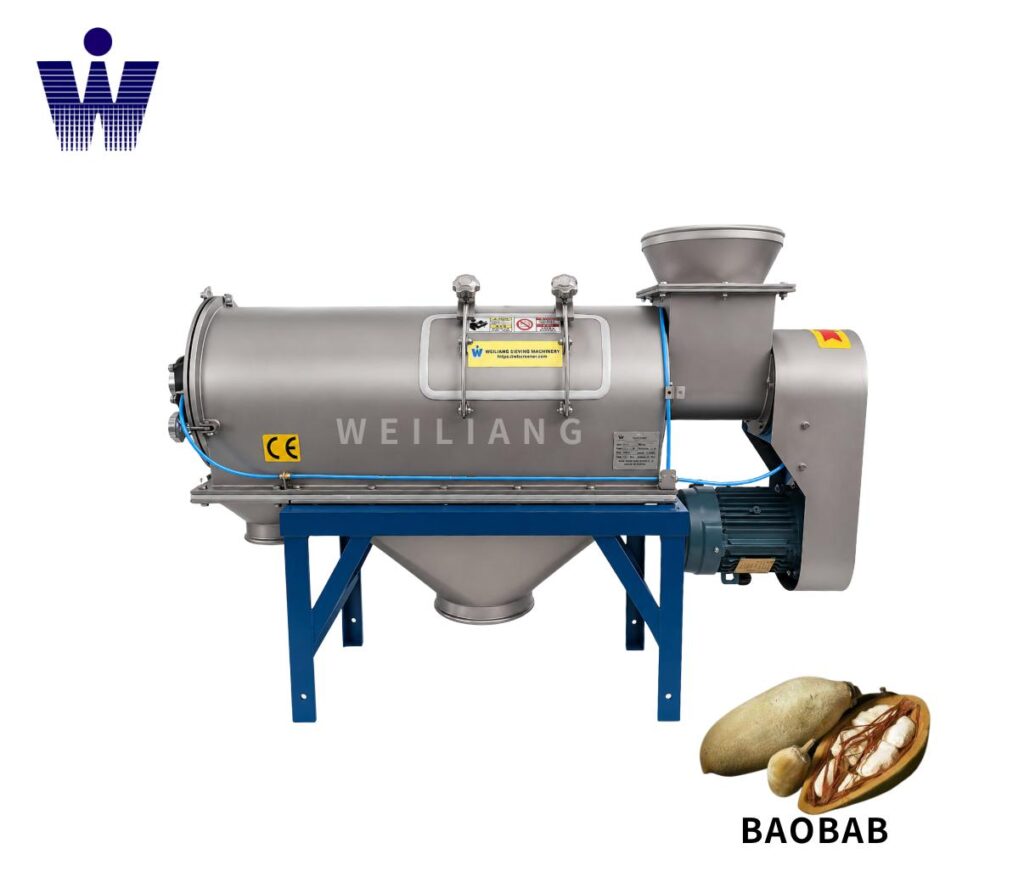
WEILIANG’s WLQ Centrifugal Screen – Baobab Processing Solution
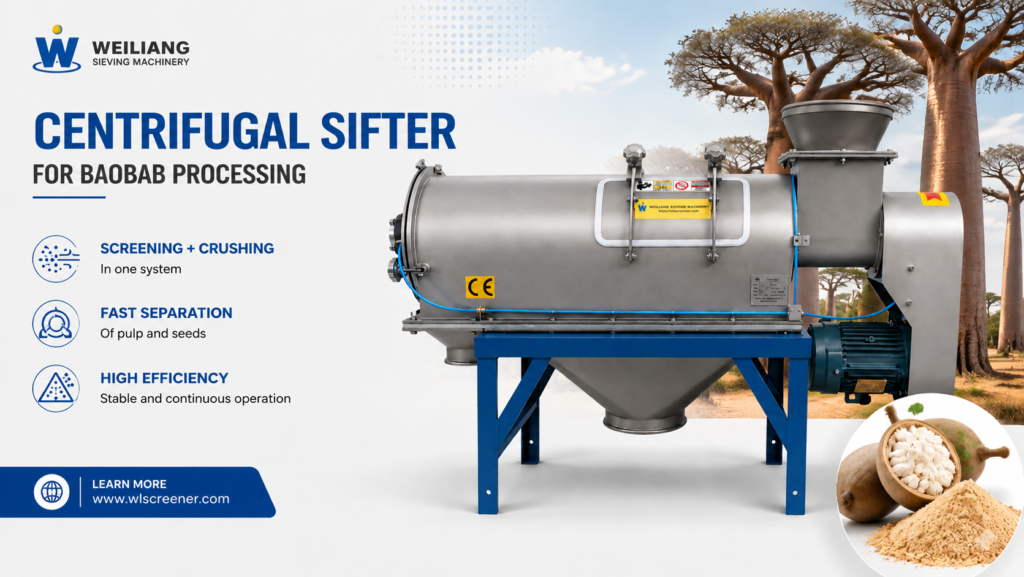
To address these processing challenges, WEILIANG developed a dedicated airflow centrifugal sifting solution based on years of application experience.
Unlike conventional vibratory screening, centrifugal screening combines conveying, gentle crushing, and centrifugal classification within a compact enclosed system.
During operation, baobab pulp enters the cylindrical screening chamber where a high-speed rotor generates centrifugal force.
The material is continuously dispersed against the screen surface.
Fine powder passes through the mesh and is discharged from the bottom outlet, while oversized particles—including seeds and coarse fibers—are discharged separately through the side outlet.
The entire process is continuous, hygienic, and highly efficient.
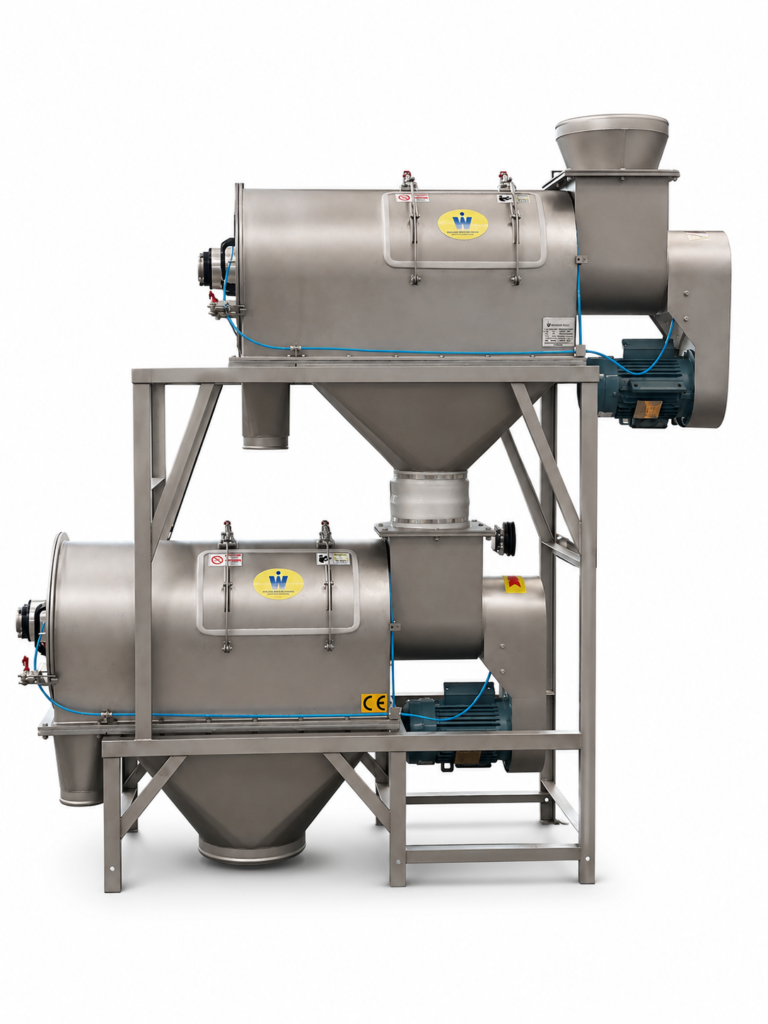
Two-Stage Screening for Superior Powder Quality
- Stage One
A heavy-duty perforated stainless steel screen removes hard seeds while resisting impact deformation.
This design offers significantly greater durability than conventional woven wire mesh when processing coarse baobab pulp.
- Stage Two
After seed removal, the material enters a second centrifugal sifter equipped with a nylon mesh screen.
This stage efficiently removes remaining fibers and coarse particles while producing a clean, uniform fine powder suitable for food processing applications.
The result is:
- Cleaner powder
- Lower fiber content
- Improved consistency
- Higher product value
Engineering Improvement Through Real Customer Feedback – Our Story with Baobab
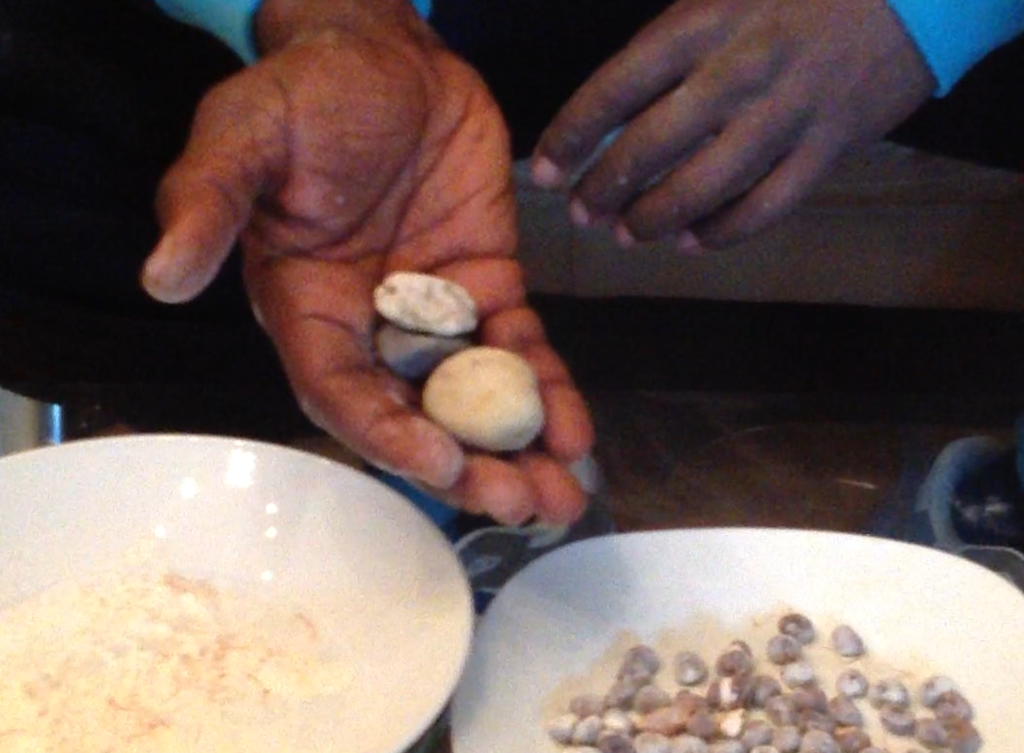
Our understanding of baobab processing did not come from laboratory research alone—it evolved through long-term collaboration with customers.
Our first exposure to baobab dates back to 2014, when a customer from Senegal introduced us to this unique application. Although that project did not move forward commercially, it gave our engineering team valuable insight into the material’s characteristics.
Several years later, we received baobab samples from another customer sourcing raw materials from Angola. Extensive testing allowed us to evaluate screening performance under real production conditions and identify opportunities for equipment improvement.
One of the most important discoveries was the effect of hard seeds on conventional wire mesh.
Repeated impacts gradually increased mesh deformation and reduced screening stability.
To overcome this issue, WEILIANG engineers developed a specially designed perforated stainless steel screen for the first separation stage, greatly improving durability and operational reliability.
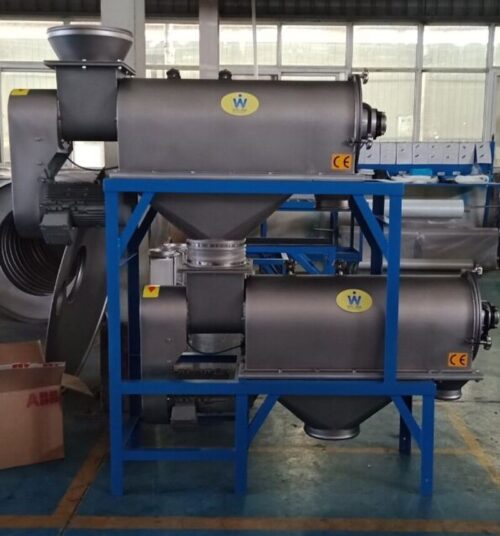
A Customer-Driven Innovation: The Two-in-One System
One particularly valuable improvement originated from a customer in Sudan.
Although changing screen cages required only a few minutes, the customer found that repeated interruptions reduced overall production efficiency.
Working closely with the customer, our engineering team developed a compact Two-in-One centrifugal sifting system.
Instead of replacing screen cages during production, two screening units operate sequentially within one integrated system.
The first unit performs seed separation.
The second unit completes fiber removal and powder classification.
This continuous design significantly reduces downtime, minimizes manual intervention, and improves production efficiency.
Following successful factory trials, the customer adopted the system for commercial production, and the cooperation has continued through multiple equipment deliveries.
Supporting the Growing Baobab Industry
Today, baobab products are exported to markets across Europe, North America, the Middle East, and Asia.
As consumer expectations continue to increase, processors face growing demands for:
- Consistent product quality
- Hygienic production
- Higher production capacity
- Lower operating costs
- Reliable equipment
Screening technology plays a crucial role in achieving these objectives.
Rather than simply separating particles, an optimized screening system contributes directly to product quality, processing efficiency, and long-term profitability.
Conclusion
Industrial baobab powder production requires more than standard screening equipment. The unique characteristics of baobab pulp—including hard seeds, natural fibers, and fine powder—demand specialized engineering solutions that balance efficiency, durability, and hygienic design.
Through more than a decade of practical experience working with baobab processors, WEILIANG has continuously refined its centrifugal screening technology to meet these challenges.
Whether supporting pilot-scale testing or large-scale industrial production, our goal remains the same: helping processors produce cleaner, more consistent baobab powder with greater efficiency and reliability.
As the global market for baobab products continues to expand, WEILIANG remains committed to developing practical screening solutions that support the sustainable growth of this remarkable industry.
Contact us now for more information!